world.wikisort.org - France
Clary (French pronunciation: [klaʁi]) is a commune of the Nord department in northern France.[2]
 | This article may be expanded with text translated from the corresponding article in French. (December 2015) Click [show] for important translation instructions.
|
Clary | |
|---|---|
Commune | |
 The town hall in Clary | |
 Coat of arms | |
Location of Clary  | |
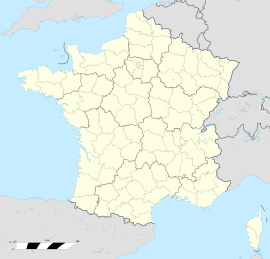  Clary 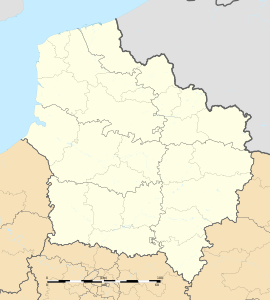 Clary | |
| Coordinates: 50°04′41″N 3°24′03″E | |
| Country | France |
| Region | Hauts-de-France |
| Department | Nord |
| Arrondissement | Cambrai |
| Canton | Le Cateau-Cambrésis |
| Intercommunality | CA Caudrésis–Catésis |
| Government | |
| • Mayor (2020–2026) | Marie-Jo Déprez |
| Area 1 | 9.93 km2 (3.83 sq mi) |
| Population | 1,088 |
| • Density | 110/km2 (280/sq mi) |
| Time zone | UTC+01:00 (CET) |
| • Summer (DST) | UTC+02:00 (CEST) |
| INSEE/Postal code | 59149 /59225 |
| Elevation | 115–152 m (377–499 ft) (avg. 123 m or 404 ft) |
| 1 French Land Register data, which excludes lakes, ponds, glaciers > 1 km2 (0.386 sq mi or 247 acres) and river estuaries. | |
Heraldry
 |
The arms of Clary are blazoned : Azure, 7 bezants (3,3,1) and a chief Or. (Clary and Illies use the same arms.)
|
World War I
The commune was liberated from German occupation by 5th/6th Battalion, Scottish Rifles, on 9 October 1918. The Place de la Mairie was renamed Place des Ecossais in their honour. When King George V visited Clary in November 1918, the same battalion was drawn up in the place to welcome him. Among those liberated was a British soldier who had been in hiding since the Battle of Le Cateau in August 1914.[3][4]
See also
Notes
- "Populations légales 2019". The National Institute of Statistics and Economic Studies. 29 December 2021.
- INSEE commune file
- Seton-Hutchinson, p. 138.
- Edmonds & Maxwell-Hyslop, p. 220.
References
- Brig-Gen Sir James E. Edmonds & Lt-Col R. Maxwell-Hyslop, History of the Great War: Military Operations, France and Belgium 1918, Vol V, 26th September–11th November, The Advance to Victory, London: HM Stationery Office, 1947/Imperial War Museum and Battery Press, 1993, ISBN 1-870423-06-2.
- Lt-Col Graham Seton-Hutchinson, The Thirty-Third Division in France and Flanders, 1915–1919, London: Waterlow & Sons 1921/Uckfield: Naval & Military Press, 2004, ISBN 978-1-84342-995-1.

Wikimedia Commons has media related to Clary (Nord).

Authority control | |
|---|---|
| General |
|
| National libraries | |

 | This Nord geographical article is a stub. You can help Wikipedia by expanding it. |
На других языках
[de] Clary
Clary ist eine Gemeinde im Norden Frankreichs. Sie gehört zur Region Hauts-de-France, zum Arrondissement Cambrai und zum Kanton Le Cateau-Cambrésis. Sie grenzt im Nordwesten an Caullery, im Norden an Ligny-en-Cambrésis, im Nordosten an Montigny-en-Cambrésis, im Osten an Bertry, im Südosten an Maretz, im Südwesten an Élincourt und im Westen an Walincourt-Selvigny.- [en] Clary, Nord
[ru] Клари (коммуна)
Клари (фр. Clary) — коммуна во Франции, регион О-де-Франс, департамент Нор, кантон Като-Камбрези. Расположена в 18 км к юго-востоку от Камбре, в 33 км к северу от Сен-Кантена и в 23 км от автомагистрали А26 «Англия».Текст в блоке "Читать" взят с сайта "Википедия" и доступен по лицензии Creative Commons Attribution-ShareAlike; в отдельных случаях могут действовать дополнительные условия.
Другой контент может иметь иную лицензию. Перед использованием материалов сайта WikiSort.org внимательно изучите правила лицензирования конкретных элементов наполнения сайта.
Другой контент может иметь иную лицензию. Перед использованием материалов сайта WikiSort.org внимательно изучите правила лицензирования конкретных элементов наполнения сайта.
2019-2026
WikiSort.org - проект по пересортировке и дополнению контента Википедии
WikiSort.org - проект по пересортировке и дополнению контента Википедии