world.wikisort.org - Russia
Lefortovo District (Russian: райо́н Лефо́ртово, IPA: [lʲɪˈfortəvə] ( listen)) is a district of South-Eastern Administrative Okrug of the federal city of Moscow, Russia. Its area is 9.15 square kilometres (3.53 sq mi).[1] Population: 91,176 (2010 Census);[4] 87,560 (2002 Census).[5]
Lefortovo District | |
|---|---|
District | |
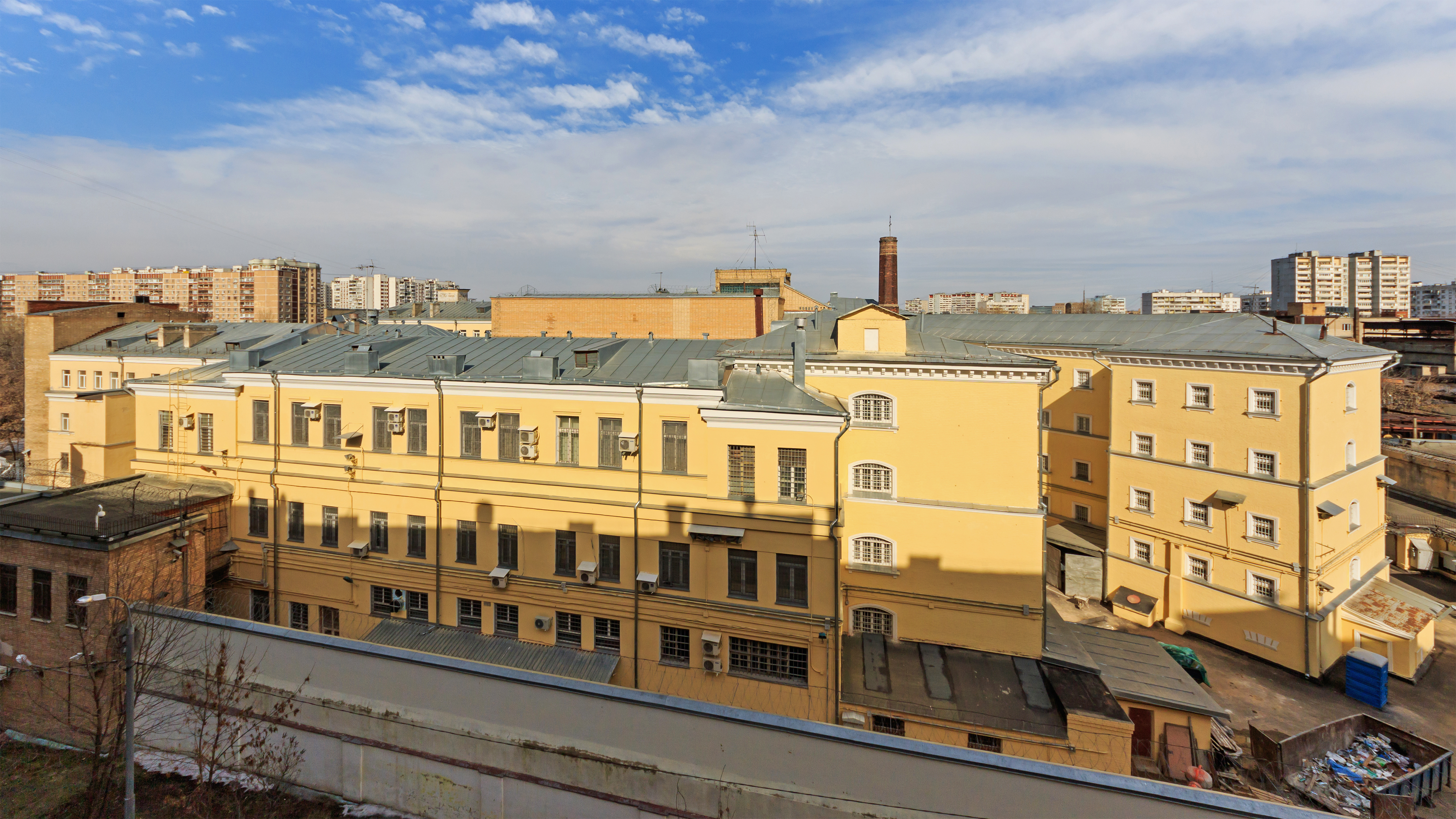 Lefortovo Prison | |
 Flag  Coat of arms | |
 Location of Lefortovo District on the map of Moscow | |
| Coordinates: 55°45′54″N 37°41′29″E | |
| Country | Russia |
| Federal subject | Moscow |
| Area | |
| • Total | 9.15 km2 (3.53 sq mi) |
| Population | |
| • Estimate (2018)[2] | 94,102 |
| Time zone | UTC+3 (MSK  [3]) [3]) |
| OKTMO ID | 45388000 |
| Website | https://lefortovo.mos.ru/ |

History
The Lefortovo District commemorates the name of a close associate of Tsar Peter the Great (r. 1682–1725), Franz Lefort (1656-1699), whose troops were stationed nearby at the German Quarter. Lefortovo is considered[by whom?] to have been founded in 1699. In the 18th century it was home to Annenhof, Lefortovo Palace, Sloboda Palace, and the Catherine Palace. In later centuries, the district hosted troops and military organizations, and also became heavily industrialized.
The present-day Lefortovo has a reputation for the Lefortovo Prison, Lefortovo Park and the Lefortovo Tunnel on the Third Ring. Several higher-educational institutions are located in Lefortovo, such as the Moscow Power Engineering Institute.
See also
- German Quarter
- Vvedenskoye Cemetery
References
- "General Information" (in Russian). Lefortovo District. Retrieved March 27, 2018.
- "26. Численность постоянного населения Российской Федерации по муниципальным образованиям на 1 января 2018 года". Federal State Statistics Service. Retrieved January 23, 2019.
- "Об исчислении времени". Официальный интернет-портал правовой информации (in Russian). June 3, 2011. Retrieved January 19, 2019.
- Russian Federal State Statistics Service (2011). Всероссийская перепись населения 2010 года. Том 1 [2010 All-Russian Population Census, vol. 1]. Всероссийская перепись населения 2010 года [2010 All-Russia Population Census] (in Russian). Federal State Statistics Service.
- Russian Federal State Statistics Service (May 21, 2004). Численность населения России, субъектов Российской Федерации в составе федеральных округов, районов, городских поселений, сельских населённых пунктов – районных центров и сельских населённых пунктов с населением 3 тысячи и более человек [Population of Russia, Its Federal Districts, Federal Subjects, Districts, Urban Localities, Rural Localities—Administrative Centers, and Rural Localities with Population of Over 3,000] (XLS). Всероссийская перепись населения 2002 года [All-Russia Population Census of 2002] (in Russian).
Administrative divisions of Moscow | ||
|---|---|---|
| Central Administrative Okrug |
|  . . |
| Northern Administrative Okrug | ||
| North-Eastern Administrative Okrug | ||
| Eastern Administrative Okrug | ||
| South-Eastern Administrative Okrug | ||
| Southern Administrative Okrug | ||
| South-Western Administrative Okrug | ||
| Western Administrative Okrug | ||
| North-Western Administrative Okrug | ||
| Zelenogradsky Administrative Okrug | ||
| Novomoskovsky Administrative Okrug |
| |
| Troitsky Administrative Okrug |
| |
| Authority control: National libraries |
|---|
На других языках
- [en] Lefortovo District
[ru] Лефортово (район Москвы)
Лефо́ртово (часть бывшего Благуше-Лефортовского района, затем Кали́нинского райо́на) — один из старейших исторических районов города Москвы и внутригородское муниципальное образование, расположен на берегу Яузы в Юго-Восточном административном округе города Москвы.Другой контент может иметь иную лицензию. Перед использованием материалов сайта WikiSort.org внимательно изучите правила лицензирования конкретных элементов наполнения сайта.
WikiSort.org - проект по пересортировке и дополнению контента Википедии