world.wikisort.org - France
Creil [kʁɛj] is a commune in the Oise department in northern France.[3] The Creil station is an important railway junction.
Creil | |
|---|---|
Commune | |
 Quartier St-Médard | |
 Coat of arms | |
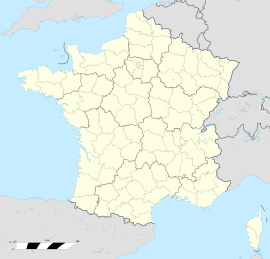
Location of Creil  | |
  Creil 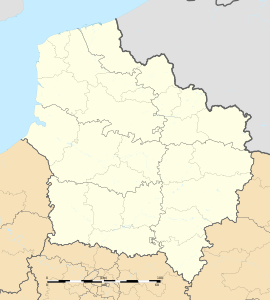 Creil | |
| Coordinates: 49°15′30″N 2°29′00″E | |
| Country | France |
| Region | Hauts-de-France |
| Department | Oise |
| Arrondissement | Senlis |
| Canton | Creil |
| Intercommunality | CA Creil Sud Oise |
| Government | |
| • Mayor (2020–2026) | Jean-Claude Villemain[1] |
| Area 1 | 11.09 km2 (4.28 sq mi) |
| Population | 36,169 |
| • Density | 3,300/km2 (8,400/sq mi) |
| Time zone | UTC+01:00 (CET) |
| • Summer (DST) | UTC+02:00 (CEST) |
| INSEE/Postal code | 60175 /60100 |
| Elevation | 26–129 m (85–423 ft) |
| 1 French Land Register data, which excludes lakes, ponds, glaciers > 1 km2 (0.386 sq mi or 247 acres) and river estuaries. | |
History
 | This article needs additional citations for verification. (September 2021) |
Archaeological remains in the area include a Neolithic site as well as a late Iron Age necropolis, perhaps belonging to a Gaulish fortress or protected camp.
The city itself is mentioned for the first time in a 633 AD document.
The Château de Creil is recorded from the 7th century.
There are some traces of a castle in which Charles VI resided during the period of his madness, c. 1390. Creil played a part of some importance in the wars of the 14th, 15th and 16th centuries.[4]
Population
|
| ||||||||||||||||||||||||||||||||||||||||||||||||||||||||||||||||||||||||||||||||||||||||||||||||||||||||||||||||||
| Source: EHESS[5] and INSEE (1968-2017)[6] | |||||||||||||||||||||||||||||||||||||||||||||||||||||||||||||||||||||||||||||||||||||||||||||||||||||||||||||||||||
International relations
Creil is twinned with:[7]
 Marl, Germany
 Pendle, England, United Kingdom
 Chorzów, Poland
 Bethlehem, Palestinian Territories
 Nabadji Civol, Senegal
- Ouro Sogui, Senegal
 Nefta, Tunisia
 Dakhla, Western Sahara


Personalities
- Houssen Abderrahmane, footballer
- Simon Banza, footballer
- Jean-François Christophe, footballer
- Fabé Dia, athlete
- Michel Chion, French film theorist and composer of experimental music
- Steve Furtado, footballer
- Helene Geoffroy, politician
- Keblack, rapper
- Lynel Kitambala, footballer
- Louis-Gabriel Le Brun, French engineer
- Johann Lion, former footballer
- Paccelis Morlende, basketball player
See also
References
- "Répertoire national des élus: les maires". data.gouv.fr, Plateforme ouverte des données publiques françaises (in French). 2 December 2020.
- "Populations légales 2019". The National Institute of Statistics and Economic Studies. 29 December 2021.
- INSEE commune file
- Chisholm, Hugh, ed. (1911). . Encyclopædia Britannica. Vol. 7 (11th ed.). Cambridge University Press. p. 402.
- Des villages de Cassini aux communes d'aujourd'hui: Commune data sheet Creil, EHESS. (in French)
- Population en historique depuis 1968, INSEE
- "Relations internationales". creil.fr (in French). Creil. Retrieved 2019-11-20.
External links
 Media related to Creil at Wikimedia Commons
- Town hall official website (in French)


Authority control | |
|---|---|
| General | |
| National libraries | |
| Other | |

 | This Oise geographical article is a stub. You can help Wikipedia by expanding it. |
На других языках
[de] Creil
Creil ist eine französische Gemeinde mit 36.169 Einwohnern (Stand 1. Januar 2019) im Département Oise in der Region Hauts-de-France; sie gehört zum Arrondissement Senlis, zum Kanton Creil und zur Communauté d’agglomération Creil Sud Oise. Die mit Creil zusammengewachsenen Vororte mitgerechnet, hat Creil über 90.000 Einwohner, womit das Gebiet der zweitgrößte Ballungsraum der Picardie nach Amiens ist.- [en] Creil
[ru] Крей
Крей (фр. Creil) — город на севере Франции, регион О-де-Франс, департамент Уаза, округ Санлис, центр одноименного кантона. Расположен в 39 км к юго-востоку от Бове и в 48 к северу от Парижа, на обоих берегах реки Уаза. Расположенная на правом берегу Уазы железнодорожная станция Крей линии Париж-Лилль является важным железнодорожным узлом: от нее отходит линия Крей-Жёмон к бельгийской границе и локальная линия Крей-Бове.Текст в блоке "Читать" взят с сайта "Википедия" и доступен по лицензии Creative Commons Attribution-ShareAlike; в отдельных случаях могут действовать дополнительные условия.
Другой контент может иметь иную лицензию. Перед использованием материалов сайта WikiSort.org внимательно изучите правила лицензирования конкретных элементов наполнения сайта.
Другой контент может иметь иную лицензию. Перед использованием материалов сайта WikiSort.org внимательно изучите правила лицензирования конкретных элементов наполнения сайта.
2019-2026
WikiSort.org - проект по пересортировке и дополнению контента Википедии
WikiSort.org - проект по пересортировке и дополнению контента Википедии