world.wikisort.org - USA
St. Paul is a town in Collin County, Texas, United States. The population was 1,066 at the 2010 census,[3] up from 630 at the 2000 census.
St. Paul, Texas | |
|---|---|
Town | |
 Seal | |
 Location of St. Paul in Collin County, Texas | |
| Coordinates: 33°2′30″N 96°32′45″W | |
| Country | United States |
| State | Texas |
| Counties | Collin |
| Government | |
| • Mayor | Opie Walter |
| Area | |
| • Total | 1.44 sq mi (3.72 km2) |
| • Land | 1.43 sq mi (3.71 km2) |
| • Water | 0.00 sq mi (0.01 km2) |
| Elevation | 530 ft (160 m) |
| Population (2010) | |
| • Total | 1,066 |
| • Estimate (2019)[2] | 1,051 |
| • Density | 732.91/sq mi (283.06/km2) |
| Time zone | UTC-6 (Central (CST)) |
| • Summer (DST) | UTC-5 (CDT) |
| Area code(s) | 214, 469, 972 |
| FIPS code | 48-64220 |
| GNIS feature ID | 2412597 |
| Website | www |
Geography
St. Paul is located in southern Collin County at 33°02′30″N 96°32′45″W.[4] It is bordered to the west, south, and east by the city of Wylie. The city of Lucas is to the north.
According to the United States Census Bureau, the town has a total area of 1.5 square miles (4.0 km2), of which 0.004 square miles (0.01 km2), or 0.34%, is covered by water.[3]
Demographics
| Historical population | |||
|---|---|---|---|
| Census | Pop. | %± | |
| 1980 | 363 | — | |
| 1990 | 415 | 14.3% | |
| 2000 | 630 | 51.8% | |
| 2010 | 1,066 | 69.2% | |
| 2019 (est.) | 1,051 | [2] | −1.4% |
| U.S. Decennial Census[5] | |||
| Race | Number | Percentage |
|---|---|---|
| White (NH) | 730 | 73.59% |
| Black or African American (NH) | 9 | 0.91% |
| Native American or Alaska Native (NH) | 4 | 0.4% |
| Asian (NH) | 24 | 2.42% |
| Some Other Race (NH) | 4 | 0.4% |
| Mixed/Multi-Racial (NH) | 60 | 6.05% |
| Hispanic or Latino | 161 | 16.23% |
| Total | 992 |
As of the 2020 United States census, there were 992 people, 239 households, and 201 families residing in the town.
References
- "2019 U.S. Gazetteer Files". United States Census Bureau. Retrieved August 7, 2020.
- "Population and Housing Unit Estimates". United States Census Bureau. May 24, 2020. Retrieved May 27, 2020.
- "Geographic Identifiers: 2010 Census Summary File 1 (G001): St. Paul town, Texas". U.S. Census Bureau, American Factfinder. Archived from the original on February 13, 2020. Retrieved August 3, 2015.
- "US Gazetteer files: 2010, 2000, and 1990". United States Census Bureau. 2011-02-12. Retrieved 2011-04-23.
- "Census of Population and Housing". Census.gov. Retrieved June 4, 2015.
- "Explore Census Data". data.census.gov. Retrieved 2022-05-22.
- https://www.census.gov/ [not specific enough to verify]
- "About the Hispanic Population and its Origin". www.census.gov. Retrieved 18 May 2022.
External links
Municipalities and communities of Collin County, Texas, United States | ||
|---|---|---|
County seat: McKinney | ||
| Cities | 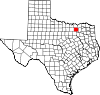 | |
| Towns | ||
| CDPs | ||
| Other communities |
| |
| Historical communities |
| |
| Ghost towns | ||
| Footnotes | ‡This populated place also has portions in an adjacent county or counties | |
| ||
Текст в блоке "Читать" взят с сайта "Википедия" и доступен по лицензии Creative Commons Attribution-ShareAlike; в отдельных случаях могут действовать дополнительные условия.
Другой контент может иметь иную лицензию. Перед использованием материалов сайта WikiSort.org внимательно изучите правила лицензирования конкретных элементов наполнения сайта.
Другой контент может иметь иную лицензию. Перед использованием материалов сайта WikiSort.org внимательно изучите правила лицензирования конкретных элементов наполнения сайта.
2019-2026
WikiSort.org - проект по пересортировке и дополнению контента Википедии
WikiSort.org - проект по пересортировке и дополнению контента Википедии