world.wikisort.org - USA
Leavitt is an unincorporated community in Lassen County, California, United States, located alongside the Southern Pacific Railroad, Fernley and Lassen Railway branch, 7 miles (11 km) east of Susanville,[2] and 7 miles west of Litchfield, at an elevation of 4,104 feet (1,251 m).[1] It is the site of the High Desert State Prison.
Leavitt, California | |
|---|---|
Former locale | |
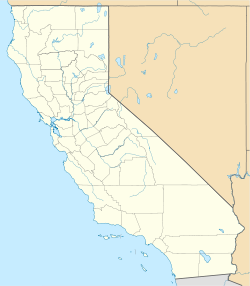  Location of Leavitt in California | |
| Coordinates: 40°23′46″N 120°31′34″W | |
| Country | United States |
| State | California |
| County | Lassen |
| Elevation | 4,104 ft (1,251 m) |
| Time zone | UTC-8 (PST) |
| • Summer (DST) | UTC-7 (PDT) |
| GNIS feature ID | 226986[1] |
History
Benjamin Hanson Leavitt (1834–1918), a pioneer rancher and lumberman who came from the state of Maine, settled in Lassen County in 1864[3] and proposed to build this town on his ranch in 1912. It consisted of one store, a few dwellings and a corral.[4] Benjamin Leavitt was a descendant of Samuel Leavitt of Exeter, New Hampshire.
Benjamin Leavitt engineered the Honey Lake Valley irrigation system, including Leavitt Lake.[5] Leavitt also named nearby Clinton, California, for his hometown of Clinton in Kennebec County, Maine.[6] (The town was renamed Leavitt Lake in 1973 when house construction began there.)[7] Benjamin Leavitt was married to Celara Cleveland (Edwards) Leavitt, born in Massachusetts.
A post office at Leavitt was established in October 1914, and named after May F. Leavitt, the first postmaster. It was discontinued in December 1920.[8]
References

- U.S. Geological Survey Geographic Names Information System: Leavitt, California. Retrieved on 2008-04-14.
- Durham, David L. (1998). California's Geographic Names: A Gazetteer of Historic and Modern Names of the State. Clovis, Calif.: Word Dancer Press. p. 392. ISBN 1-884995-14-4.
- Fairfield's Pioneer History of Lassen County, California, Containing Everything that Can Be Learned About It from the Beginning of the World to the Year of Our Lord 1870, Asa Merrill Fairfield, Published for the Author by the H.S. Crocker Company, San Francisco, 1916
- Purdy, Tim. "Exploring Lassen County's Past:Levitt City". tipurdy.com. Retrieved 14 July 2020.
- Lassen County News, Dec. 14, 2004[permanent dead link]
- Bingham, Joseph W. (1916). Cases on the Law of Water Rights. Bobs-Merrill. p. 400. OCLC 2114665. (Google Books)
- Lassen County Office of Education Archived 2010-11-03 at the Wayback Machine
- Salley, Harold E. (1991) History of California Post Offices, 1849–1990, p. 116. The Depot, ISBN 0-943645-27-1
Municipalities and communities of Lassen County, California, United States | ||
|---|---|---|
County seat: Susanville | ||
| City |  | |
| CDPs | ||
| Unincorporated communities |
| |
| Indian reservation |
| |
| Ghost towns | ||
| ||
Другой контент может иметь иную лицензию. Перед использованием материалов сайта WikiSort.org внимательно изучите правила лицензирования конкретных элементов наполнения сайта.
WikiSort.org - проект по пересортировке и дополнению контента Википедии