world.wikisort.org - Australia
St Kitts is a locality northeast of the Barossa Valley in South Australia.[3] The school and both Lutheran churches have closed. The main industry in the area is cereal grain crop farming.
| St Kitts South Australia | |||||||||||||||
|---|---|---|---|---|---|---|---|---|---|---|---|---|---|---|---|
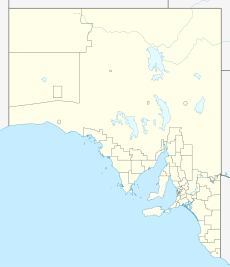  St Kitts | |||||||||||||||
| Coordinates | 34.3°S 139.1°E | ||||||||||||||
| Population | 43 (SAL 2021)[1] | ||||||||||||||
| Established | 16 March 2000 (locality)[2] | ||||||||||||||
| Postcode(s) | 5356 | ||||||||||||||
| Location | 7 km (4 mi) northwest of Truro | ||||||||||||||
| LGA(s) | Light Regional Council | ||||||||||||||
| State electorate(s) | Stuart | ||||||||||||||
| Federal division(s) | Barker | ||||||||||||||
| |||||||||||||||
St Kitts was settled in the 1850s and 1860s by immigrant Sorbs or Wends who had migrated from Saxony (then part of Prussia, now mostly in western Poland).[4]
St Kitts St Petri (St Peter) congregation was established in 1866 and constructed its building in 1869, replaced by a newer building in 1910 on the corner of St Kitts West and Tablelands Roads. St Kitts St Paul's congregation began in 1903 and built its own church building a little further along Tablelands Road. Both churches had cemeteries. St Paul's closed in 1949.[5][self-published source?] St Petri is also now closed and both buildings are private homes.
References
- Australian Bureau of Statistics (28 June 2022). "St Kitts (Suburb and Locality)". Australian Census 2021 QuickStats. Retrieved 28 June 2022.
- "GEOGRAPHICAL NAMES ACT 1991, Notice to Assign Names and Boundaries to Places (within the District Council of Kapunda and Light )" (PDF). The South Australian Government Gazette. South Australian Government. 16 March 2000. p. 1433. Retrieved 6 March 2018.
- "Placename Details: St Kitts". Property Location Browser Report. Government of South Australia. 22 August 2006. SA0064368. Retrieved 17 June 2017.
- "Drive to the Unique Historic township of Dutton and Wendish Settlement of St Kitts" (PDF). Truro and District Community Association Inc. Retrieved 17 June 2017.
- Moad, Graeme. "St Kitts, South Australia". Retrieved 17 June 2017.

 | This South Australia geography article is a stub. You can help Wikipedia by expanding it. |
Другой контент может иметь иную лицензию. Перед использованием материалов сайта WikiSort.org внимательно изучите правила лицензирования конкретных элементов наполнения сайта.
WikiSort.org - проект по пересортировке и дополнению контента Википедии